


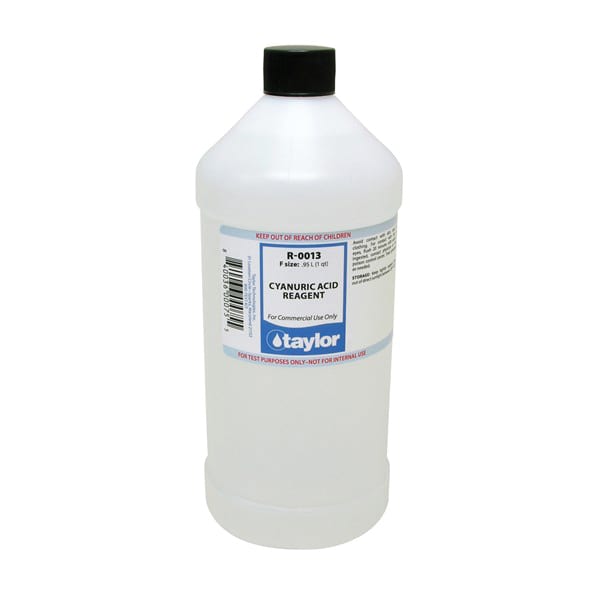
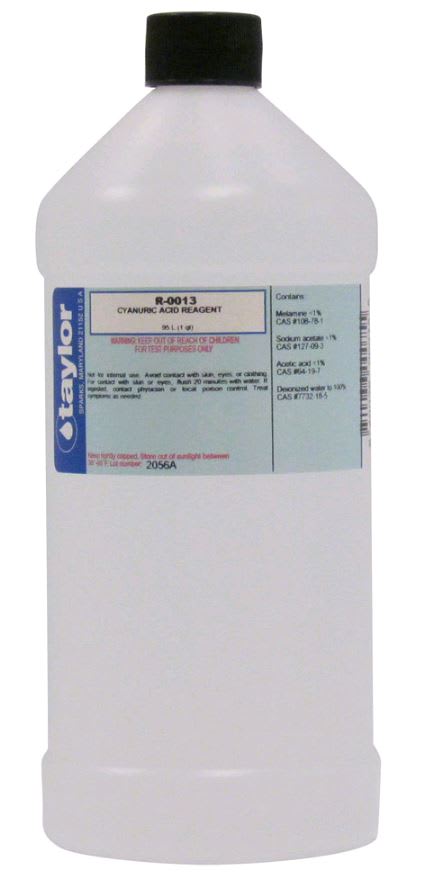
Taylor Cyanuric Acid Reagent, 32 Ounce - R-0013-F
The Taylor Cyanuric Acid Reagent, 32 Ounce is part number R-0013-F.
Taylor formulates its reagents to remain effective for at least one year, with only very few exceptions (molybdenum indicator in liquid form is one; after four months old it should be tested against a standard periodically). As a general precaution, replace all reagents more than one year old, or at the beginning of a new testing season.
Features
- Storage Recommendations:
- Storing reagents at a consistent temperature in the range if 36°–85°F (2°–29°C), extreme temperature fluctuation, say from a refrigerator to a hot car trunk, causes reagents to deteriorate.
- Keeping them out of prolonged direct sunlight. (Note: their brown plastic bottles help protect very light-sensitive reagents.)
- Segregating reagents from containers of treatment chemicals.
- Replacing caps immediately and tightening them carefully so that exposure to air and humidity is limited.
- Avoiding switching bottle caps, placing bottle caps on soiled surfaces, repouring reagents into contaminated containers, or touching test strip pads.
Specifications
- Brand: Taylor
- Part Number: R-0013-F
Please confirm the part number matches your existing equipment before ordering.
GTIN: 840036000755
SKU: R-0013-F
Brand: Taylor
Sale price
$30.23
Regular price
$46.00
Shipping and tax are calculated at checkout.
In stock
8 people viewing
-
Free Shipping On orders over $150
-
30-Day Returns Easy return policy
-
Manufacturer Warranty Manufacturer warranty included
Key Features
- Storage Recommendations:
- Storing reagents at a consistent temperature in the range if 36°–85°F (2°–29°C), extreme temperature fluctuation, say from a refrigerator to a hot car trunk, causes reagents to deteriorate.
- Keeping them out of prolonged direct sunlight. (Note: their brown plastic bottles help protect very light-sensitive reagents.)
- Segregating reagents from containers of treatment chemicals.
- Replacing caps immediately and tightening them carefully so that exposure to air and humidity is limited.
- Avoiding switching bottle caps, placing bottle caps on soiled surfaces, repouring reagents into contaminated containers, or touching test strip pads.
